WILDLIFE
Before you cut back ivy, look for flowers and berries
Common ivy is easy to dismiss as untidy growth, but mature ivy can be an important late-season food source.
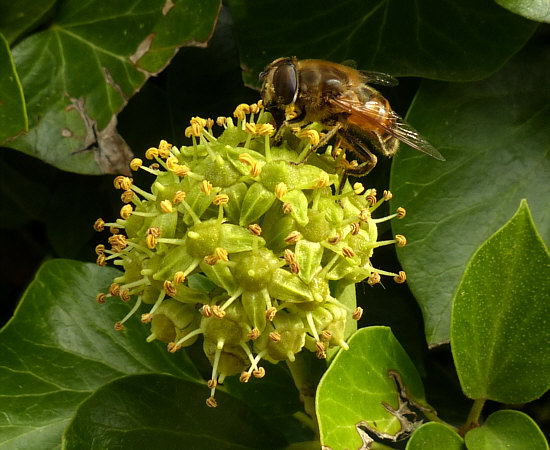
Why mature ivy is different
Young climbing ivy mainly produces the familiar lobed leaves. Mature growth can flower in autumn, when fewer other nectar sources are available, and those flowers are valuable to bees, hoverflies and other insects.
Then come the berries
After flowering, mature ivy can produce dark berries that provide food for birds through colder months.
You can still keep it tidy
Wildlife value does not mean allowing ivy to take over. Selective trimming can control access, windows, gutters, paths and boundaries while leaving some mature flowering growth intact where it is safe to do so.
Need a hand with the garden?
Use the KS Garden Services price guide for an estimated cost, or get in touch about regular maintenance and one-off work.
Get an estimated price →